
Macarons Troubleshooting Guide: Common Problems and Fixes
This post may contain affiliate links.
French Macarons are one of the most beautiful French pastries, but they can also be one of the most challenging to master. From cracked shells and missing feet to hollow centers and sticky bottoms, even small changes in mixing, resting, or oven temperature can affect the final result.
If you’ve ever followed a macaron recipe carefully and still ended up with disappointing shells, don’t worry! Troubleshooting macarons is part of learning the technique.
In this guide, I’ll explain the most common macaron problems, why they happen, and what you can do to achieve smooth tops, beautiful feet, and soft, chewy centers.
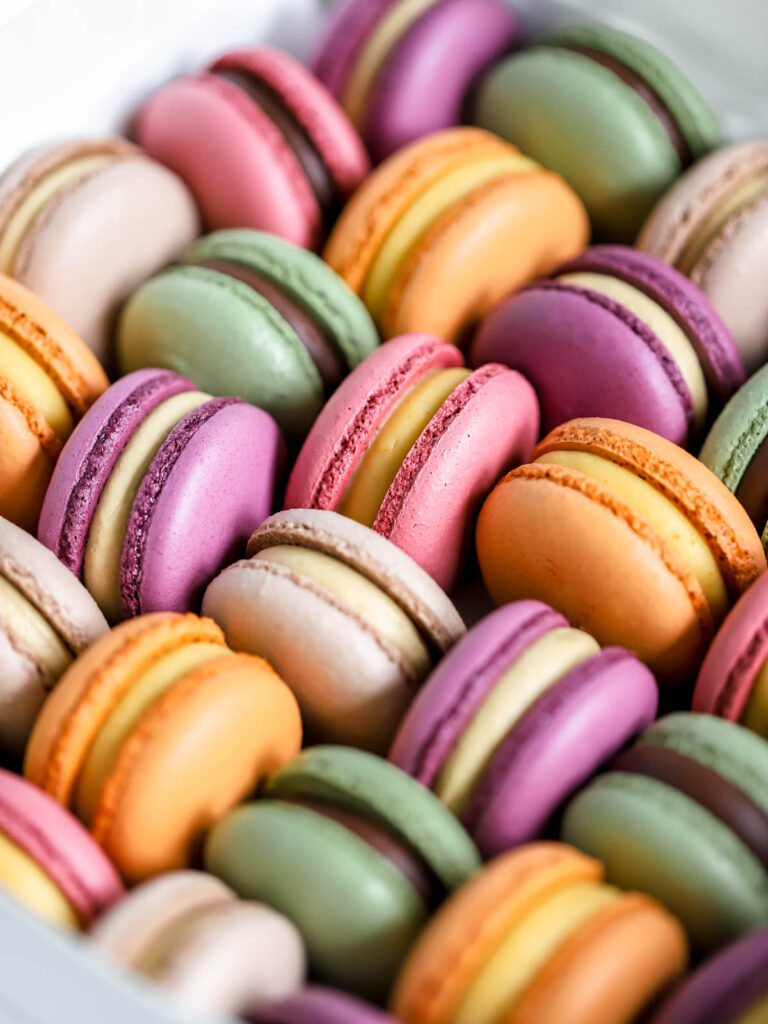
Table of Contents
- Why Are My Macarons Not Turning Out?
- Why Are My Macarons Cracked on Top?
- Why Do My Macarons Have No Feet?
- Why Are My Macarons Hollow Inside?
- Why Are My Macarons Flat?
- Why Are My Macarons Lumpy or Bumpy?
- Why Are My Macarons Wrinkled?
- Why Are My Macarons Brown Instead of Their Intended Color?
- Why Are My Macarons Lopsided?
- Why Do My Macarons Stick to the Parchment Paper?
- Why Are My Macarons Too Dry or Hard?
- My Best Tips for Perfect French Macarons
- Frequently Asked Questions
- Final Thoughts
- Macaron Troubleshooting Chart
- My Latest Video
Why Are My Macarons Not Turning Out?
Successful macarons depend on a few important factors: properly whipped meringue, the correct batter consistency, adequate resting time, and accurate oven temperature.
The good news is that most macaron problems have identifiable causes. The key is to change one variable at a time so you can understand what works best in your kitchen.
Why Are My Macarons Cracked on Top?
Cracked shells are one of the most common problems when making macarons.
Possible causes:
- The shells did not rest long enough before baking.
- The oven temperature was too high.
- Large air bubbles were trapped in the batter.
- The batter was not mixed to the correct consistency.
How to fix cracked macarons:
After piping, let the shells rest until their surfaces feel dry to the touch and no batter sticks to your finger. Resting time varies with humidity, so use the surface as your guide rather than relying only on the clock.
Tap the baking tray firmly against the counter several times to release trapped air bubbles, and pop any visible bubbles with a toothpick.
If your macarons continue to crack, check your oven temperature with an oven thermometer and try lowering the temperature slightly.
Why Do My Macarons Have No Feet?
Macaron feet are the delicate ruffled edges that form around the bottom of each shell during baking.
Possible causes:
- The meringue was too weak.
- The batter was overmixed.
- The shells were not sufficiently rested.
- The oven temperature was too low.
- Excess moisture affected the batter or drying process.
How to fix macarons without feet:
Whip your egg whites until the meringue is glossy and holds firm peaks. Fold the almond flour and powdered sugar mixture into the meringue carefully, stopping when the batter flows slowly from your spatula in a thick ribbon.
Rest the shells until a dry skin forms, then bake using the temperature recommended by your recipe. If the feet still do not develop, test a slightly different oven temperature with a small batch.
Why Are My Macarons Hollow Inside?
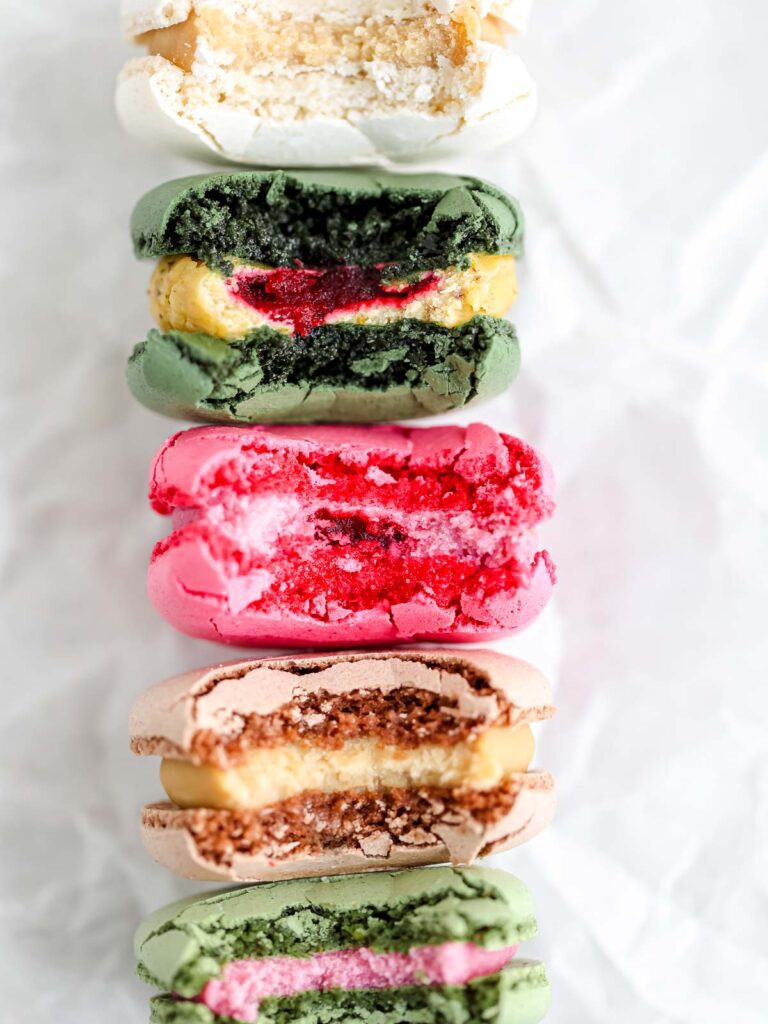
Hollow macarons have an air pocket between the top shell and the interior.
Possible causes:
- The meringue was underwhipped or overwhipped.
- The batter was under-mixed or overmixed.
- The oven temperature was too high.
- The shells were not baked long enough to set properly.
How to fix hollow macarons:
Aim for a stable, glossy meringue with firm peaks, rather than a dry or clumpy texture.
Pay close attention to macaronage, the folding process that combines the dry ingredients with the meringue. The batter should flow smoothly without becoming excessively runny.
Check that the shells are fully baked before removing them from the oven. If they collapse or feel wet inside, they may need a little more baking time. If hollow centers persist, test a slightly lower oven temperature.
A small air pocket is not always a disaster. Filled macarons can soften and improve in texture as they mature in the refrigerator.
Why Are My Macarons Flat?
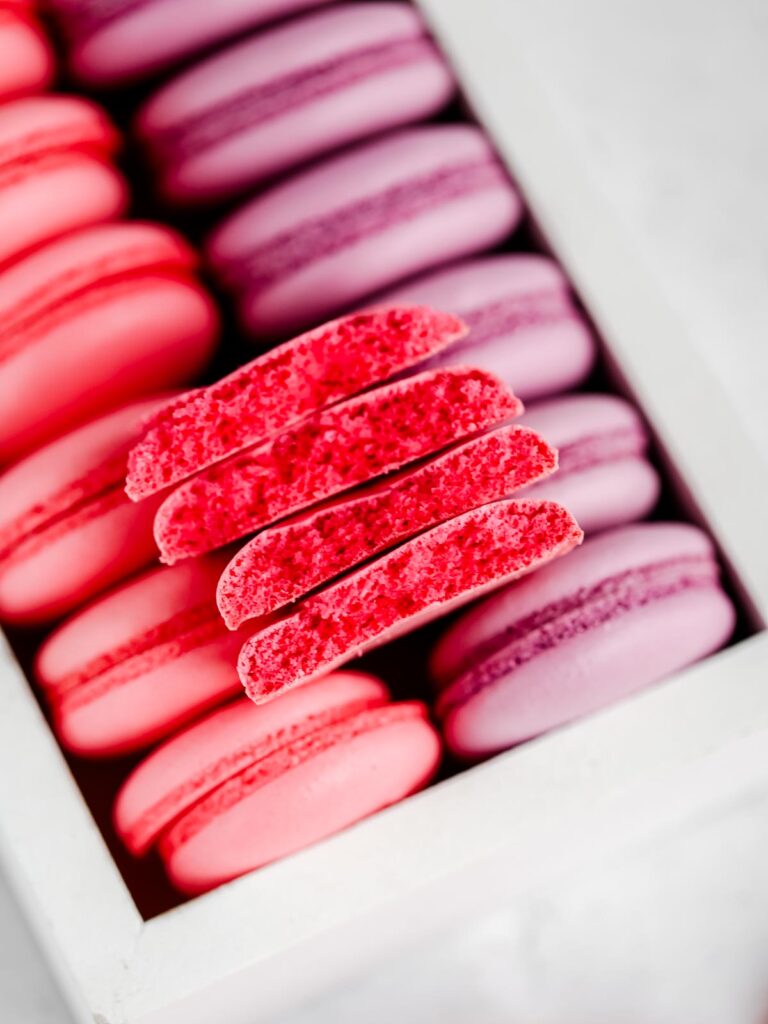
Flat macarons spread too much and may have little or no definition.
Possible causes:
- The batter was overmixed.
- The meringue was not stable enough.
- Too much liquid food coloring or flavoring was added.
- The egg whites were contaminated with grease or egg yolk.
How to fix flat macarons:
Fold the batter slowly and check its consistency frequently. Stop when it flows in a continuous ribbon and gradually blends back into the batter.
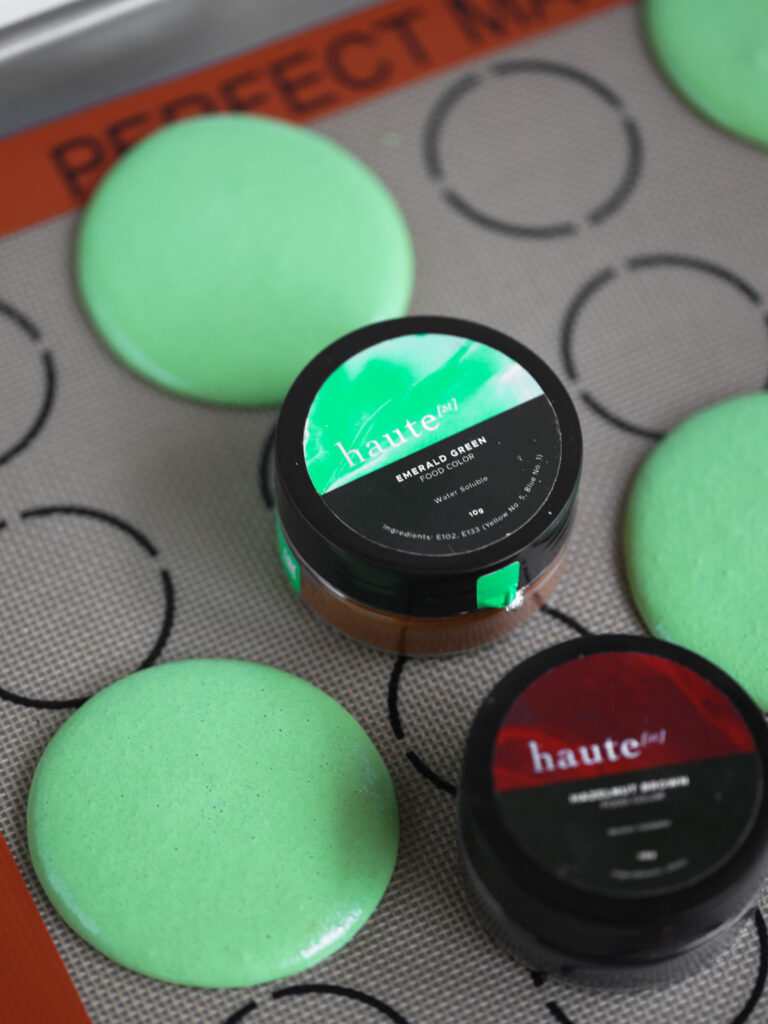
Use gel or powdered food coloring rather than adding excess liquid. Make sure your mixing bowl and whisk are completely clean and grease-free before whipping the egg whites.
Once batter has become excessively runny, additional folding will not fix it. For the next batch, stop mixing earlier.
Why Are My Macarons Lumpy or Bumpy?
Smooth, glossy tops are a signature of well-made macarons.
Possible causes:
- The almond flour is too coarse.
- The dry ingredients were not sifted thoroughly.
- The batter was under-mixed.
- Air bubbles remained in the piped shells.
How to fix bumpy macarons:
Sift the almond flour and powdered sugar together before mixing. If necessary, use finely ground blanched almond flour for a smoother finish.
Mix until the batter reaches the correct ribbon consistency, then tap the tray gently to release trapped air. Pop visible bubbles with a toothpick before resting the shells.
Why Are My Macarons Wrinkled?
Wrinkled or uneven shells can be frustrating, especially when you want a professional-looking finish.
Possible causes:
- The almond flour contains too much oil.
- The meringue was unstable.
- The oven temperature was too high or inconsistent.
- The batter consistency was incorrect.
How to fix wrinkled macarons:
Use fresh, finely ground almond flour and measure all ingredients by weight. Avoid processing almond flour excessively, as this can release more oil.
Check your oven temperature and make sure the meringue is glossy and stable before folding in the dry ingredients.
Why Are My Macarons Brown Instead of Their Intended Color?
Pastel pink, lavender, pistachio green, and other delicate colors can fade or brown during baking.
Possible causes:
- The oven temperature is too high.
- The shells are baking too close to the upper heating element.
- The shells are baking for too long.
- The color was too pale to begin with.
How to fix browning macarons:
Use gel or powdered food coloring suited to baking. If your recipe permits, use a little more coloring to compensate for fading.
Check the actual oven temperature and consider moving the tray to a lower rack if the tops brown too quickly. You can also test a double baking tray to reduce excessive bottom heat.
Avoid changing the temperature and baking time dramatically at once. Make small adjustments and test one tray.
Why Are My Macarons Lopsided?
Lopsided macarons may lean to one side or develop uneven feet.
Possible causes:
- The piping bag was held at an angle.
- The baking tray is warped.
- The oven has uneven airflow or hot spots.
- A convection fan is blowing too strongly.
How to fix lopsided macarons:
Hold the piping bag vertically and pipe each shell in the same spot and size. Use a macaron template underneath your parchment paper for consistency.
Bake on a flat, sturdy baking tray. If you use a convection oven, test the conventional setting if available, since strong airflow can affect the shells.
Why Do My Macarons Stick to the Parchment Paper?
Macaron shells should release cleanly once they have cooled sufficiently.
Possible causes:
- The shells are underbaked.
- The shells are still too warm.
- The baking surface is unsuitable or uneven.
How to fix sticky macaron shells:
Allow the shells to cool completely before removing them from the parchment paper or silicone mat.
If they still stick after cooling, return the tray to the oven for a short additional baking interval, checking frequently. For the next batch, verify your oven temperature and make sure the shells are fully set before removing them.
Why Are My Macarons Too Dry or Hard?
Macarons should have a delicate outer shell and a tender, slightly chewy center.
Possible causes:
- The shells were overbaked.
- The oven temperature was too high.
- The shells were too small for the baking time used.
How to fix dry macarons:
Check your oven temperature and begin checking for doneness near the lower end of your recipe’s suggested baking time.
Once assembled, refrigerate the filled macarons in an airtight container and allow them to mature before serving. Depending on the filling, this resting period helps moisture redistribute between the filling and shells.
My Best Tips for Perfect French Macarons
Here are the habits that make the biggest difference when baking macarons:
- Weigh your ingredients. A digital kitchen scale is much more reliable than measuring cups.
- Use clean equipment. Even a small amount of grease or egg yolk can prevent egg whites from whipping properly.
- Whip the meringue correctly. Look for a glossy texture and firm peaks.
- Master macaronage. Fold carefully and check the batter frequently to avoid overmixing.
- Rest the shells properly. Bake when the surface has developed a dry skin.
- Check your oven temperature. An oven thermometer helps identify temperature fluctuations.
- Avoid excessive liquid. Choose suitable gel or powdered coloring and use liquid flavorings sparingly.
- Keep a baking journal. Record mixing time, resting time, oven temperature, and results so you can repeat successful batches.

Frequently Asked Questions
How long should macarons rest before baking?
Resting time depends on the recipe and kitchen conditions. It may take around 20–60 minutes, sometimes longer in humid weather. The shells are ready when the surface feels dry to a light touch and the batter does not stick to your finger.
Can I save macaron batter that is too runny?
Unfortunately, once the batter has been overmixed, it is difficult to restore its original structure. You can still bake it and use the shells for a dessert or crumble, but the next batch will benefit from stopping the folding process earlier.
Why do my macarons crack even after resting?
Possible causes include excessive oven heat, trapped air bubbles, or incorrect batter consistency. Check your oven with an independent thermometer and make sure the shells are dry before baking.
Should I use parchment paper or a silicone mat?
Both can work well. The important thing is to use a flat, consistent baking surface and keep the same surface while testing changes to your recipe.
Why are my macarons chewy after baking?
Macarons can have a slightly chewy center naturally. If they are excessively gummy or collapse, they may be underbaked. If they are crisp immediately after baking, filling and refrigerating them for a suitable maturation period can help improve their texture.
Final Thoughts
Making French macarons takes practice, patience, and attention to detail. Even experienced bakers occasionally encounter cracked shells, hollow centers, or uneven feet.
Instead of changing everything at once, identify the problem, adjust one variable, and keep notes on each batch. Over time, you will learn how your oven, ingredients, and mixing technique affect the results.
With practice, you can create beautiful, smooth macaron shells ready to fill with your favorite buttercream, ganache, fruit curd, or salted caramel.
Macaron Troubleshooting Chart
| Problem | Likely cause | First thing to try |
|---|---|---|
| Cracked tops | High oven heat or insufficient resting | Check oven temperature and skin formation |
| No feet | Weak meringue, incorrect mixing, or insufficient resting | Check meringue and batter consistency |
| Hollow centers | Meringue, mixing, or baking issues | Test meringue stability and baking time |
| Flat shells | Overmixed batter | Stop folding earlier |
| Bumpy tops | Coarse almond flour or trapped air | Sift dry ingredients and tap the tray |
| Wrinkled shells | Ingredient or baking imbalance | Check almond flour and oven temperature |
| Brown tops | Excessive heat | Adjust rack position or temperature |
| Lopsided shells | Piping or airflow problems | Pipe vertically on a flat tray |
| Sticky bottoms | Underbaking or premature removal | Cool fully and check doneness |
| Dry, hard shells | Overbaking | Check earlier for doneness |


